Customize the display
Adjust the colors to ensure sufficient contrast.

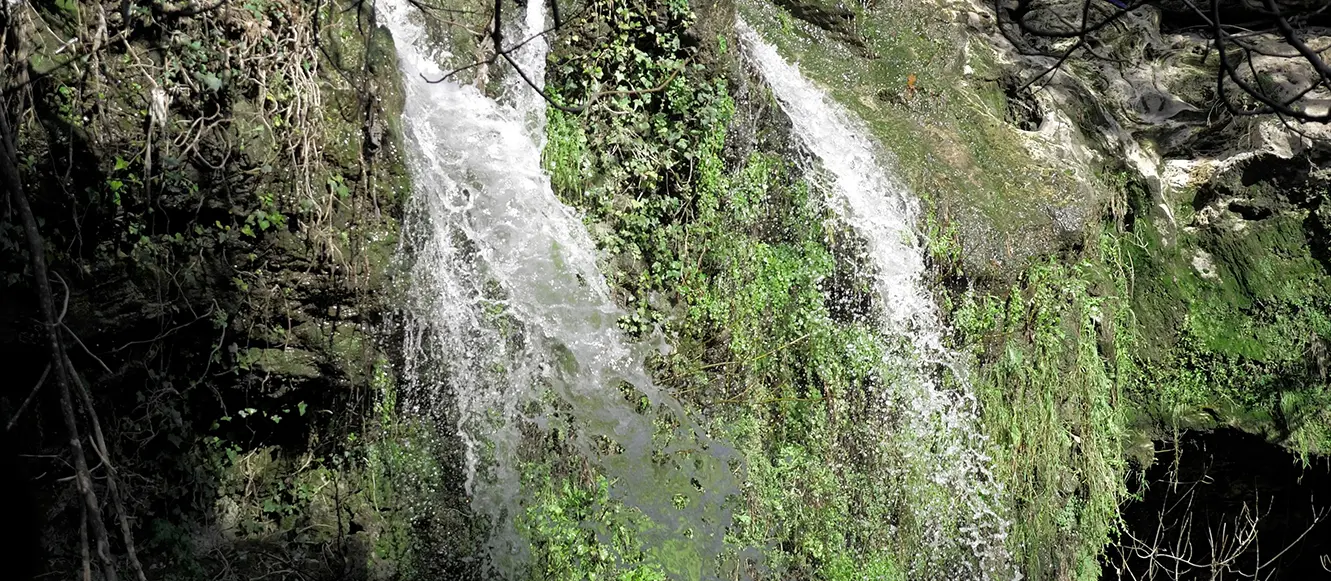
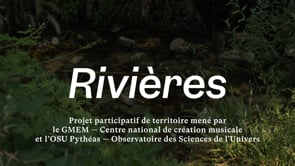
Following *Sans Nom Dit*, *Pétrole*, *Les Pupitres de la Cayolle*, and *Sonord*, theGMEM presents its new regional art project:*Rivières*.
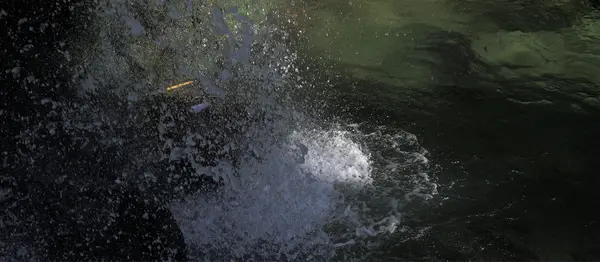
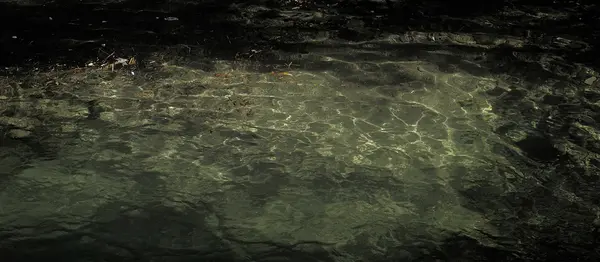
Rivières is a participatory regional project led jointly by GMEM—the National Center for Musical Creation—and OSU Pythéas—the Observatory of the Sciences of the Universe. Through an art-science approach, it invites participants and residents to rediscover the various waterways that flow through Marseille: the Huveaune, the Jarret, and the Aygalades. In doing so, it explores the perceptions and knowledge that Marseille residents have of their often-overlooked rivers, as well as the issues associated with them: pollution, ecology, urban planning, uses, and risks.
The project brings together a scientific team from the IMBE—the Mediterranean Institute for Biodiversity and Marine and Continental Ecology—and sound and visual artists. Together, they design workshops that combine science outreach with sound creation. These workshops take various forms: sound recording workshops, field exploration, introductions to radio production and composition, DIY sound projects, installations, lectures, and concerts.
Scheduled to run for three years, Rivières is implemented through one-time and long-term initiatives, targeting a wide range of audiences and organizations (schools, retirement homes, nonprofit organizations, social and recreational centers, and the general public).
In partnership with the following institutions:
ESDM - École Supérieure de Design de Marseille (13013)
Lycée Denis Diderot (13013)
Lycée des Métiers René Caillié (13011)
Lycée Irène et Frédéric Joliot-Curie (13400, Aubagne)
dates to be announced
> #1: Invisible Rivers
Invisible Rivers offers a contemporary interpretation of Marseille’s waterways—the Huveaune, the Jarret, and the Aygalades—through a mixed sound improvisation blending percussion and electronic music. Sound thus becomes a space for exploration and resonance, allowing us to hear these rivers, their histories, their transformations, and the landscapes they traverse in a new light.
Sat., Oct. 10, 2026
Performance as part of “La Fête de la Science,” with Alex Grillo, Christian Sebille, Elo Layet, Jean-Marc Layet
Sun.,Oct. 4, 2026
Performance as part of “La Fête du Ruisseau,” with Alex Grillo, Christian Sebille, AntoineDevillet
Wed. June 10 + Thu., June 11, 2026
“Invisible Rivers” event, featuring Christian Sebille (electronics), Alex Grillo (percussion), and Thierry Tatoni (ecologist), at the GMEM.
“Habiter la Rivière” is a sound and visual installation created by Nathalie Ong, Julie Rousse, and Mayura Torii.
Inspired by the history of Marseille’s rivers and by scientific research conducted along the river, the artists have created a poetic soundscape. At the center of the installation, a structure made of tubes unfolds among containers holding water from Marseille’s rivers. The captured sounds are transformed and then diffused throughout the space, circulating through the tubes and wires that run through the structure. Paper cups hang from the ends of some of the wires. Viewers can pick up a cup, hold it to their ear to listen to the sounds flowing through it, or speak into it. Each cup bears a word, a quote, or an excerpt from a scientific text related to water and rivers. Viewers can read it, respond to it, speak, or simply listen.
The installation thus becomes a network through which water, sounds, words, and voices flow.
Tue., June 23, 2026
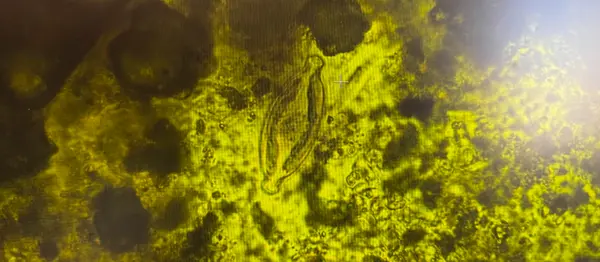
Field trip to the Jarret area and laboratory analysis, with Nathalie Ong, Julie Rousse, and Mayura Torii (sound and visual artists) and Stéphanie Fayolle, Evelyne Franquet, and Nicolas Kaldonski (researchers).
> #3: Making the River Visible Again
> #4: Even the smallest task

Mentions
Co-production
GMEM — National Center for Musical Creation; OSU Pythéas (Observatory of Universe Sciences): AMU/CNRS/INRAE/IRD; IMBE (Mediterranean Institute for Biodiversity and Marine and Continental Ecology): CNRS/IRD; EcoComplex-Biodiv Thematic School.
Support
PEPR ICCARE—priority research program and equipment dedicated to the cultural and creative industries, led by the CNRS.
GMEM — National Center for Musical Creation; OSU Pythéas (Observatory of Universe Sciences): AMU/CNRS/INRAE/IRD; IMBE (Mediterranean Institute for Biodiversity and Marine and Continental Ecology): CNRS/IRD; EcoComplex-Biodiv Thematic School.
Support
PEPR ICCARE—priority research program and equipment dedicated to the cultural and creative industries, led by the CNRS.


This work received government funding administered by the National Research Agency under the France 2030 program, grant number ANR-23-PEIC-0001.
Biography(s)
Alvise Sinivia
Pianist, improviser, and performer
For several years, Alvise has been exploring the sonic and physical paradoxes and limits of his instrument. Trained at the Conservatoire National Supérieur de Musique et de Danse de Paris under Alain Planès and Emmanuel Strosser, he draws inspiration for his music from encounters and collaborations with composers and artists from all walks of life, particularly within ONCEIM.
He regularly contributes to theater as a composer, live musician, and performer, with recent works such as *La Défense devant les Survivants* (2022) and an adaptation ofOlivier Cadiot’s *Médecine Générale* (2023–2025).
As a resident at the Villa Medici (2016–2017), he explored the relationship between movement and sound, founding his own company and creating multidisciplinary works such as *Ersilia*, *Le Hurle*, and *MICROGRAPHIA*. He is currently developing a series of solo pieces by choreographers on the theme of secrecy, featuring a sound installation based on the repurposing of a magnetic tape player.
Julie Rousse
Sound artist and composer
Inspired by the concepts of space, ritual, and ecology, she incorporates her sound library into her free improvisation practice using a digital platform for real-time sound processing. Sifting through raw material in search of textures and rhythms, she creates teeming, immersive pieces using sounds recorded on-site, tailored for a specific project and moment. A 2015 recipient of the Institut Français grant, she has refined her work around sound ecology: her latest projects explore our place in the universe or alongside a complex ecosystem such as a river. Research, exploration, field recordings, and compositions all converge on a particular focus on the world through sound, from the banks of the Rhône to the cosmos.
She grounds her research in scientific aspects, drawing from real-world experience to convey them sensitively in sound works by blending pure field recordings with experimental interpretation. Notable works include *Métamorphoses*, an immersive multiphonic sound installation; *Horizon(s)*, an audiovisual installation from 2023; and*EXO - Spatio-Temporal Archaeology* from 2015, created with Félicie d’Estienne d’Orves, a monumental audiovisual installation. Since 2001, her work has been presented internationally at major events, festivals, and venues dedicated to digital arts and experimental music, through sound installations and performances, either solo or in collaboration with artists from the experimental scene, from Afghanistan to Chile.
Nathalie Ong
Sound Artist
Nathalie Ong is a sound artist whose work spans radio production and electroacoustic composition, recorded media and live performance, composition and improvisation, portraiture and landscape, and storytelling and musicality.
Nathalie trained in sound and radio production at Phonurgia Nova and in the electroacoustic composition class at the Cité de la Musique in Marseille. She studied life storytelling with biographer Marie d’Hombres and literary creation as part of the Master’s program in Ecopoetics and Creation at Aix-Marseille University.
In 2017, she helped launch a music festival for young audiences at Le Cri du Port (Marseille). There, radio and podcasts became tools for outreach and collective creation.
Since then, she has been writing and composing for the productions of the Micromondes theater company, founded in 2023.
Christian Sebille
Composer
Appointed in 2011 as director of the GMEM, the National Center for Musical Creation in Marseille, Christian Sebille serves in the dual roles of director and composer.
Beginning in 1983, he devoted himself to electroacoustic music, which he studied with Jean Schwartz (Gennevilliers Conservatory) and Philippe Prévost (IRCAM), and then, in 1987, to mixed media music at La Muse en Circuit with Luc Ferrari.
In 1993, he founded Césaré in Reims, which became the National Center for Musical Creation in 2006 and whose artistic direction is focused on openness and the convergence of artistic disciplines and styles.
Christian Sebille’s catalog includes more than seventy vocal, instrumental, electroacoustic, and mixed-media works. Beginning in 1998, he developed computer-based instrument design, which allowed him to explore the fields of improvisation and real-time performance both in France and abroad. (Alex Grillo, Philippe Foch, Matt Bourne, Miquèu Montanaro…). From 2002 to 2013, he created a large-scale series of musical installationstitled *Les 13 miniatures*, in which he explored the concepts of space and landscape—elements that have since come to characterize and define his artistic practice.
Since 2009, a series titled*Les concerts radiophoniques* has involved staging performances in which all electroacoustic elements (interviews, field recordings, real-time processing, sound effects) are combined with the presence of musicians to create a live radio production. The most recent ones, created with Philippe Foch (percussion), drew parallels between the two industrial sites of Donges (Pays de Loire) and Martigues (Étang de Berre). The most recent piece was commissioned and presented as part of the DigitIZMir festival (Izmir, Turkey) in 2024.
Since 2018, Christian Sebille, in residence at CIRVA (International Center for Glass and Art Research), has been working onthe project*Paysage de Propagations*, a series of projects that takes on a wide variety of presentation formats, such as installation, performance, and concert.
Since 2022, he has been creating a series of performed electronic pieces. The first was commissioned by the Chaillol Cultural Center (*Le chant des cimes*); the second, *Embrasser un arbre embrasserle temps* (2022–2025), is a landscape performance with choreographer Emmanuelle Huynh in which the question of landscape and space remains central.
In 2025, Christian Sebille will create *En voiture, une Musique-Fiction* (a series for an ambient sound installation—IRCAM-Centre Pompidou) based on an original text by Olivia Rosenthal.
Marie Reinert
Visual Artist
Marie Reinert was born in France in 1971; she lives and works in Valmondois (France). She has developed an artistic practice that straddles the boundaries of video, installation, drawing, performance, and sound. Her work takes shape through residencies, most often conducted within the world of work. By fostering collaborations with local people or inviting participants to act or intervene, she has worked with dancers, architects, musicians, ergonomists, and others. The body stands as the central focus of her research: she employs strategies of infiltration, observation, and archiving to examine the systems, codes, and protocols that shape the movements of bodies within their spatial and social environments. Marie Reinert has participated in numerous exhibitions in France and abroad. Her work is included in several public collections: the Departmental Collection of Contemporary Art of the General Council of Seine-Saint-Denis, the General Council of Ille-et-Vilaine, the FRAC Provence-Alpes-Côte d’Azur, and the National Center for Visual Arts, as well as in private collections and the prestigious Faber-Castell Collection in Germany.
Mayura Torii
Visual Artist
Mayura Torii lets herself be carried away by a sense of uncertainty, a blurring of genres and values. She captures and constructs this uncertainty and confusion, always with a smile. She injects playfulness—a subtle touch of whimsy—into the pontificating nature of the concept. In doing so, she remains amused and skeptical of the West’s overvaluation of performative thought. Yet she does not merely point out that there are worlds with different orientations and hierarchies. Starting from a lighthearted destabilization, she explores the sensations of pleasure and wonder inherent in a change of scenery. Each of these works conveys the disorientation of transition, the indecision at the threshold, and the delightful thrill of crossing a small mental boundary. This body of work, rooted in language, explores sensations of strangeness and a presence that is more or less detached from reality.
Thierry Tatoni
Professor at Aix-Marseille University; After establishing and leading a team in “landscape ecology and conservation biology,” then serving as director of the Mediterranean Institute of Ecology and Paleoecology from 2004 to 2011, he founded and directed the Mediterranean Institute of Biodiversity and Marine and Continental Ecology (UMR CNRS / IRD / Aix-Marseille University / University of Avignon) from 2012 to 2018. He is currently a CNRS project manager for the Partnership Program in Ecology and the Environment (DiPEE) in the South region. His research focuses on ecological vulnerability, as well as ecological functions and a holistic approach to the services provided by biodiversity. As he is deeply committed to transferring knowledge to biodiversity managers and land-use planners, he serves on several scientific advisory boards for protected natural areas (notably as chair of the scientific advisory boards for the Calanques National Park, the Luberon Regional Nature Park, and the Sainte-Baume Regional Nature Park), as a member of the CORP of the Federation of Regional Nature Parks, the scientific advisory board of the Conservatoire du Littoral, the SRADDET, and the PACA Regional Biodiversity Committee.
Hugo Maurer
Ph.D. candidate in environmental sciences at IMBE - Aix-Marseille University. Head of Strategy and Project Management at Néo-Eco.
Stéphanie Fayolle
Associate Professor of Environment and Biodiversity (AMU), Ph.D. in Environmental Sciences, specialist in river pollution.
Evelyne Franquet
Professor at IMBE - Aix-Marseille University. For more than 25 years, she has been studying the vulnerability of benthic macroinvertebrates to disturbances of natural or anthropogenic origin. By investigating the link between population vulnerability and the functioning of aquatic ecosystems, Evelyne contributes to a better understanding of the biological traits of macroinvertebrates and of the wetlands, rivers, and lakes of the Mediterranean region. Her primary research focus is on chironomid Diptera. In particular, she has been able to draw on her collaborations with other hydrobiologists on the team (algal specialists, zooplankton specialists, and fish specialists) to establish the link between planktonic primary production and benthic and planktonic secondary production through the study of ecosystem evolution trajectories and, in particular, tipping points (metabolism in Girardon cages, high-altitude lakes, and urban or peri-urban rivers).
Nicolas Kaldonski
Associate Professor at Aix-Marseille University, where he conducts research at IMBE, a research unit of the OSU Institut Pythéas. His research focuses primarily on the link between host-parasite relationships and environmental pressures, as well as the relationship between biodiversity and land-use planning. His primary research interests include behavioral ecology, evolutionary parasitology, and the conservation of continental aquatic habitats. Nicolas also teaches courses in behavioral ecology, parasitic ecology, ecophysiology, evolutionary ecology, and naturalist knowledge. He is the program director for the first year of the Master’s program in Biodiversity, Ecology, and Evolution.
Jean-Marc Layet
Professor Emeritus at Aix-Marseille University
Former Vice President for the Sciences Division at the University of Provence. He continues his research in physics at the Laboratory of Physics of Ionic and Molecular Interactions (UMR AMU-CNRS 7345). He is also deeply involved in issues related to energy and its impact on climate and biodiversity. In this context, he co-founded the ECOCOMPLEX think tank with Professor Thierry Tatoni, which takes an interdisciplinary approach to addressing socio-environmental problems in all their complexity. He chairs the Provence chapter of the French Physical Society and, as a strong advocate for science outreach, gives talks at high schools and middle schools.
Rivers
Participatory territory project
Regional Development Plan
Distribution
Artistic team
, consisting of
Alvise Sinivia
Julie Rousse
Nathalie Ong
Christian Sebille
Sound artists
, Marie Reinert
Mayura Torii
visual artists
’s research team, consisting of
, Thierry Tatoni
, Hugo Maurer
, Stéphanie Fayolle
, Evelyne Franquet
, Nicolas Kaldonski
, andLaurence Affre
—researchers at IMBE (Mediterranean Institute for Biodiversity and Marine and Continental Ecology—OSU Pythéas—CNRS/AMU/IRD/University of Avignon).
UAR Pythéas Coordination - CNRS/AMU/IRD/INRAE
, comprising:
, Thierry Botti
(Head of Communications and Knowledge Dissemination),
,Mélody Didier
(graphic designer, multimedia producer)
2026–2027 Calendar
Mon., Oct. 5 — Fri., Oct. 9, 2026
Artistic residency at GMEM, with Julie Rousse, Nathalie Ong, and Mayura Torii.
Mon., Sept. 21 — Fri., Sept. 25, 2026
Creative residency at GMEM, with Julie Rousse, Nathalie Ong, and Mayura Torii.
Wed., June 10 and Thu., June 11, 2026
Artist residency at GMEM, with Alex Grillo, Christian Sebille, and Antoine Devillet.
2025–2026 Calendar
Tue., June 23, 2026
Field trip to the Jarret area and laboratory analysis, with Nathalie Ong, Julie Rousse, Mayura Torii (sound and visual artists), and Stéphanie Fayolle, Evelyne Franquet, and Nicolas Kaldonski (researchers).
Wed., Jan. 28 + Thu., Jan. 29, 2026
A two-day seminar consisting of a meeting and a presentation of the project at GMEM, followed by field trips to the banks of the Huveaune and Jarret rivers and the Aygalades Waterfall.
Useful links
You will also like...