Customize the display
Adjust the colors to ensure sufficient contrast.

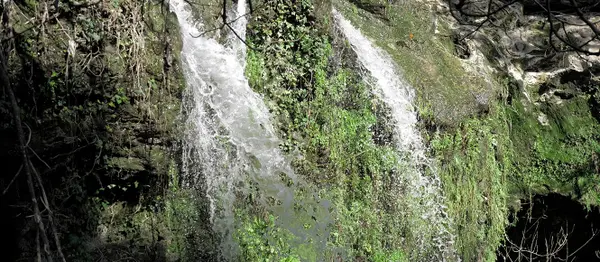
Residency as part of the “Rivières” regional project.
"Habiter la Rivière " is a sound and visual installation created by Nathalie Ong, Julie Rousse, and Mayura Torii.
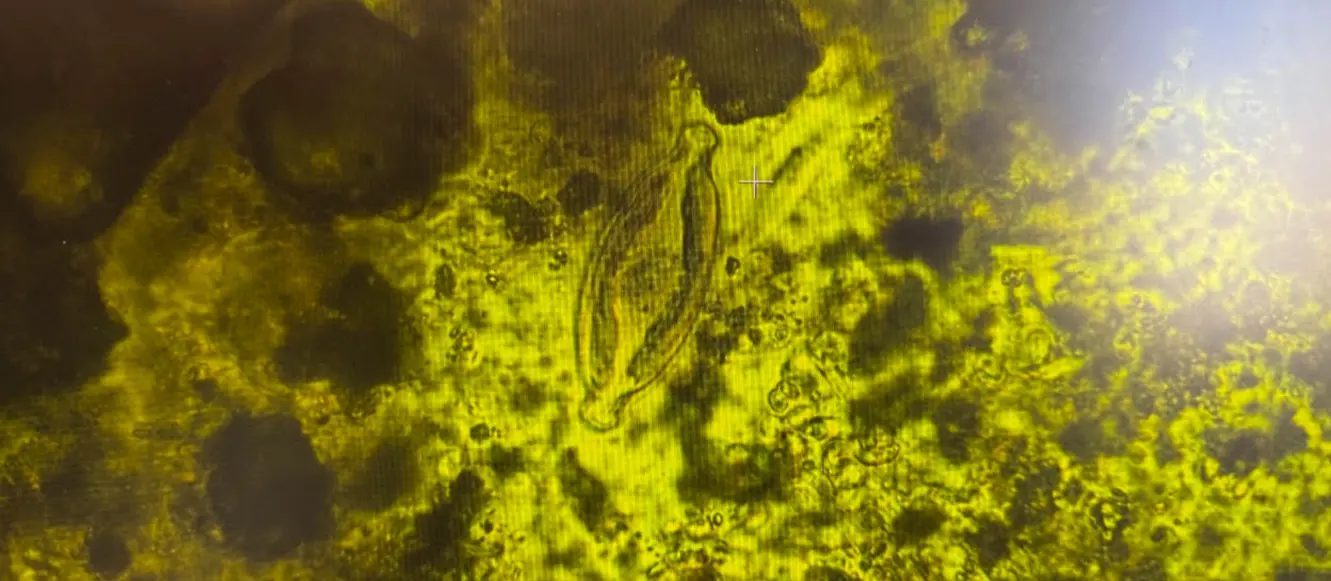
Inspired by the history of Marseille’s rivers and by scientific research conducted along the river, the artists have created a poetic soundscape.
At the center of the installation, a structure made of tubes extends among containers filled with water from rivers in Marseille. The sounds captured are transformed and then diffused throughout the space, traveling through the tubes and wires that run through the structure.
Paper cups are suspended from the ends of some of the strings. Viewers can take a cup, hold it to their ear to listen to the sounds traveling through it, or speak into it.
Each cup bears a word, a quote, or an excerpt from a scientific text related to water and rivers. The viewer can read it, respond to it, speak, or simply listen.
The installation thus becomes a network through which water, sounds, words, and voices flow.
Mentions
Co-production
GMEM — National Center for Musical Creation; OSU Pythéas (Observatory of Universe Sciences): AMU/CNRS/INRAE/IRD; IMBE (Mediterranean Institute for Biodiversity and Marine and Continental Ecology): CNRS/IRD; EcoComplex-Biodiv Thematic School.
Support
PEPR ICCARE—priority research program and equipment dedicated to the cultural and creative industries, led by the CNRS.
GMEM — National Center for Musical Creation; OSU Pythéas (Observatory of Universe Sciences): AMU/CNRS/INRAE/IRD; IMBE (Mediterranean Institute for Biodiversity and Marine and Continental Ecology): CNRS/IRD; EcoComplex-Biodiv Thematic School.
Support
PEPR ICCARE—priority research program and equipment dedicated to the cultural and creative industries, led by the CNRS.

This work received government funding administered by the National Research Agency under the France 2030 program, grant number ANR-23-PEIC-0001.
Biography(s)
Julie Rousse
Sound artist and composer
Inspired by the concepts of space, ritual, and ecology, she incorporates her sound library into her practice of free improvisation using a digital platform for real-time sound processing. Sifting through raw material in search of textures and rhythms, she creates teeming, immersive pieces using sounds recorded on-site and tailored for a specific project and moment. A 2015 Institut Français awardee, she has focused her work on sound ecology: her latest works explore our place in the universe or alongside a complex ecosystem such as a river. Research, exploration, field recordings, and compositions all converge on a particular focus on the world through sound, from the banks of the Rhône to the cosmos.
She grounds her research in scientific aspects, drawing from real-world experiences to convey them sensitively through sound works by blending pure field recordings with experimental interpretation. Notable works include *Métamorphoses*, an immersive multiphonic sound installation; *Horizon(s)*, an audiovisual installation from 2023; and*EXO - Spatio-Temporal Archaeology* from 2015, created with Félicie d’Estienne d’Orves, a monumental audiovisual installation. Since 2001, her work has been presented internationally at major events, festivals, and venues dedicated to digital arts and experimental music, through sound installations and performances—both solo and in collaboration with artists from the experimental scene—from Afghanistan to Chile.
Nathalie Ong
Sound artist
Nathalie Ong is a sound artist whose work ranges from radio creation to electroacoustic composition, from recorded media to live performance, writing to improvisation, portraiture to landscape, narration to musicality.
Nathalie trained in sound and radio creation at Phonurgia Nova and in the electroacoustic composition class at the Cité de la Musique in Marseille. She trained in life storytelling with biographer Marie d'Hombres and in literary creation in the Ecopoetics and Creation Master's program at Aix-Marseille University.
In 2017, she participated in the creation of a music festival for young audiences at Le Cri du Port (Marseille). Radio and podcasts became tools for mediation and collective creation.
Since then, she has been writing and composing for the shows of the Micromondes company, founded in 2023.
Mayura Torii
Visual Artist
Mayura Torii lets herself be carried away by a sense of uncertainty—a blurring of genres and values. She captures and constructs this uncertainty and confusion, always with a smile. She injects playfulness—a subtle touch of silliness—into the pontificating nature of the concept. In this way, she remains amused and skeptical of the West’s overvaluation of performative thought. Yet she does not merely content herself with pointing out that there are worlds oriented differently, with hierarchies of their own. Starting from a lighthearted destabilization, she explores the sensations of pleasure and wonder inherent in a change of scenery. Each of these works conveys the disorientation of transition, the indecision at the threshold, and the delightful thrill of crossing a small mental boundary. This body of work, rooted in language, explores sensations of strangeness and a presence that is more or less detached from reality.
Stéphanie Fayolle
Associate Professor of Environment/Biodiversity (AMU), Ph.D. in Environmental Sciences, specialist in river pollution.
Evelyne Franquet
Professor at IMBE - Aix-Marseille University. For more than 25 years, she has been studying the vulnerability of benthic macroinvertebrates to disturbances of natural or anthropogenic origin. By investigating the link between population vulnerability and the functioning of aquatic ecosystems, Evelyne contributes to a better understanding of the biological traits of macroinvertebrates and of the wetlands, rivers, and lakes of the Mediterranean region. Her primary research focus is on chironomid Diptera. In particular, she has been able to draw on her collaborations with other hydrobiologists on the team (algal specialists, zooplankton specialists, and fish specialists) to establish the link between planktonic primary production and benthic and planktonic secondary production through the study of ecosystem evolution trajectories and, in particular, tipping points (metabolism in Girardon cages, high-altitude lakes, and urban or peri-urban rivers).
Nicolas Kaldonski
Associate Professor at Aix-Marseille University, where he conducts research at IMBE, a research unit of the OSU Institut Pythéas. His research focuses primarily on the link between host-parasite relationships and environmental pressures, as well as the relationship between biodiversity and land-use planning. His primary research interests include behavioral ecology, evolutionary parasitology, and the conservation of continental aquatic habitats. Nicolas also teaches courses in behavioral ecology, parasitic ecology, ecophysiology, evolutionary ecology, and naturalist knowledge. He is the program director for the first year of the Master’s program in Biodiversity, Ecology, and Evolution.
Living by the River
Julie Rousse, Nathalie Ong, Mayura Torii
Residence
Mon., Sept. 21 —— Fri., Sept. 25, 2026
Mon., Oct. 5 —— Fri., Oct. 9, 2026
Distribution
Nathalie Ong
Julie Rousse
concept, sound art, composition
Mayura Torii
: design, visual arts
Stéphanie Fayolle
Évelyne Franquet
Laurence Affre
Nicolas Kaldonski
scientific team
In collaboration with
, OSU – Pythéas
, Lycée René Caillié
Useful links
You will also like...