 Customize the display
Adjust the colors to ensure sufficient contrast.

A residency to compose electroacoustic music to accompany Aleksander Hertz's film, and to produce a meticulous mix under optimal listening conditions.
Music composed in stereo for performance on an Acousmonium as part of an electroacoustic film concert.
In preparation for the premiere on November 26, 2026, at the Forum ByPass, Toulouse Film Library.
*Bestia* (or*The Polish Dancer*) is a film by Polish director Aleksander Hertz (1879–1928) that tells the story of a young dancer from a modest background whose talent and charm open the doors to high society. Driven by ambition, jealousy, and her destructive passions, her success gradually turns into a tragic downfall.
This film is one of the first cinematic portrayals of a femme fatale, introducing Pola Negri and heralding a new way of depicting desire, ambition, and transgression in European cinema.
Dance is at the heart of the film, which is set primarily in a cabaret and features several striking, almost surreal dance scenes. Although the film is silent, music is suggested through movement, offering a fascinating perspective on the interplay with sound.
The archetypal narrative structure of this film—which was modern at the time but is now well established—provides an opportunity to disrupt the narrative through sound and to experiment by layering the film’s temporal structure with more complex sonic temporalities, allowing the image to be viewed from different perspectives.
The exploration of timbres is a crucial aspect of this project: sound design can thus become music, and the soundscapes evoked by the images will interact with synthesized sounds, concrete sounds, and transformed instrumental or vocal sounds...

Mentions
Order "
" by éOle - music production studio
Support
, Sacem (funding for commissioning and production); Toulouse Film Archive
Biography(s)
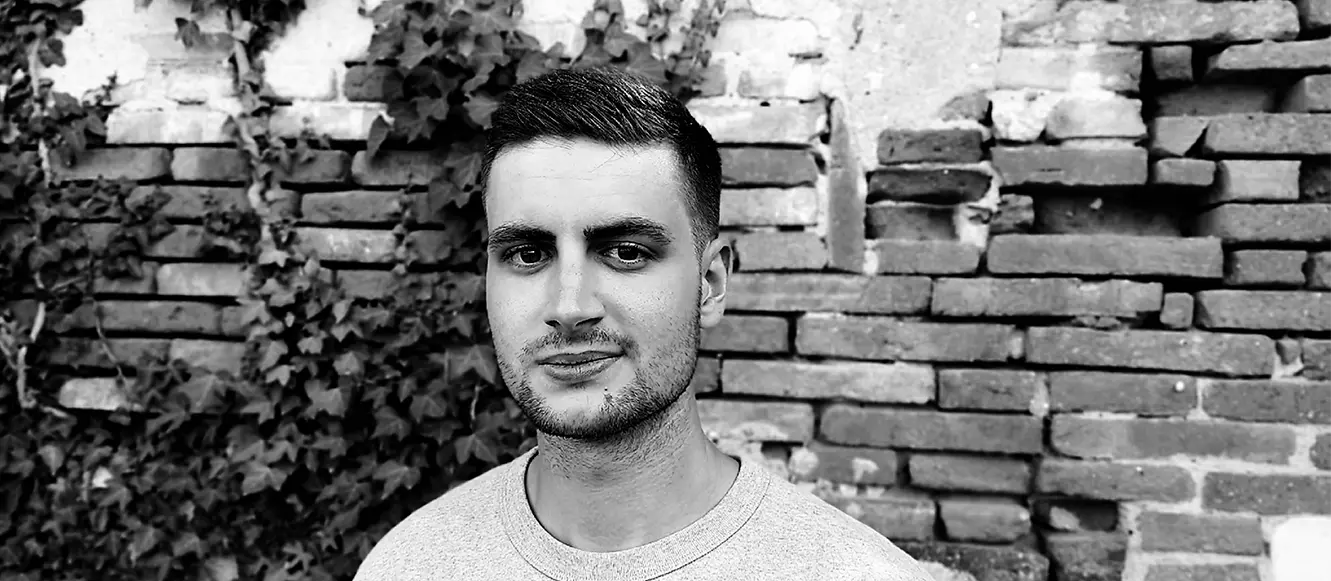
Vincent Portes
composer
A French composer born in 1995 and based in Paris, Vincent Portes writes music strongly influenced by electronics, signal processing, micro-editing, and various methods of sound synthesis… The application of these tools and techniques to the instrumental realm is the central focus of his work, particularly in mixed-media pieces that combine instruments and electronics.
He completed the Composition and Music Computing program at IRCAM, after studying with Martin Matalon at the CNSMD in Lyon and in the classes of Bertrand Dubedout and Guy Ferla at the CRR in Toulouse, where he began his studies in both electroacoustic composition and instrumental and vocal composition. He has had the opportunity to work with numerous musicians and ensembles, notably the L’Instant Donné ensemble, the Sillages ensemble, pianist Jean-Frédéric Neuburger, the Meitar ensemble, the Multilatérale ensemble, the Eco ensemble, the Kebyart saxophone quartet, the Ensemble Orchestral Contemporain, the Divertimento ensemble, the Nouvel Ensemble Moderne... He has received commissions from Radio France, the Philharmonie de Paris, the Ensemble(s) Festival, the Ravel Festival, and Studio éOle...
His scores are published by Éditions Henry Lemoine.
Bestia
Vincent Portes
Residence
Mon., Nov. 16 —— Fri., Nov. 20, 2026
Distribution
Vincent Portes
, composition
Useful links