 Customize the display
Adjust the colors to ensure sufficient contrast.

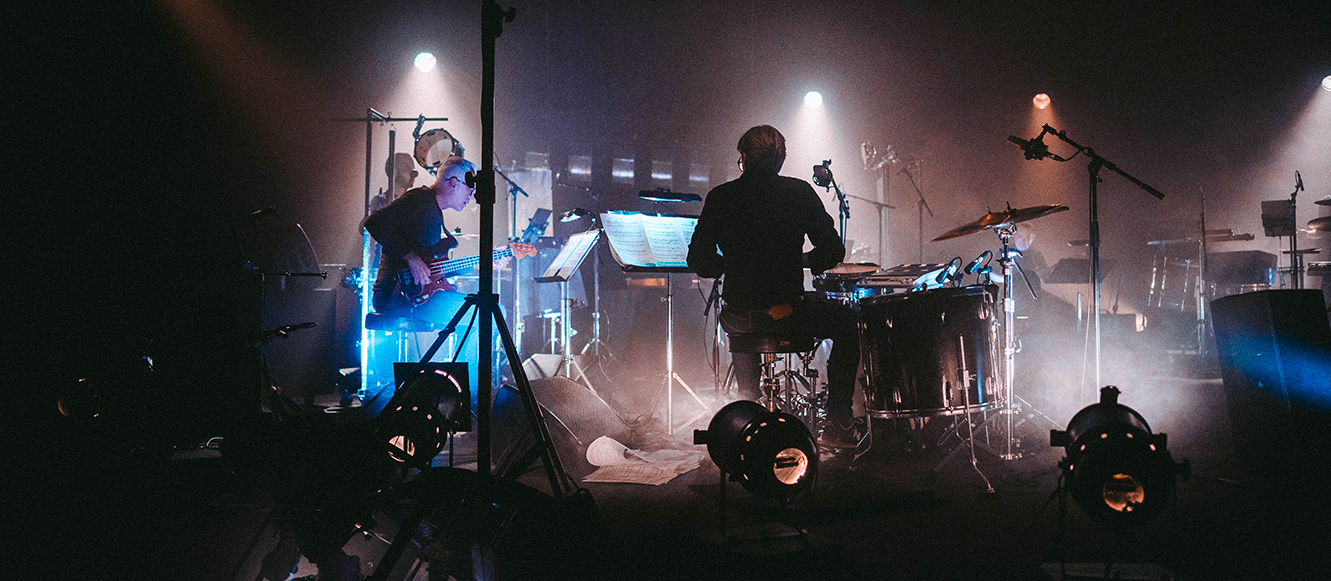
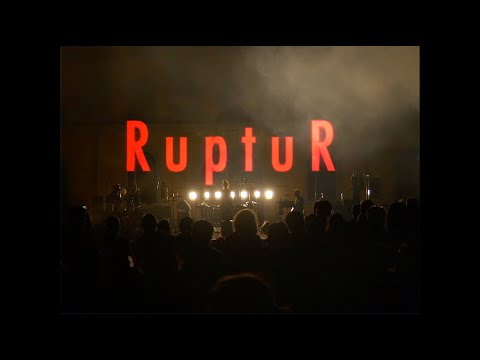
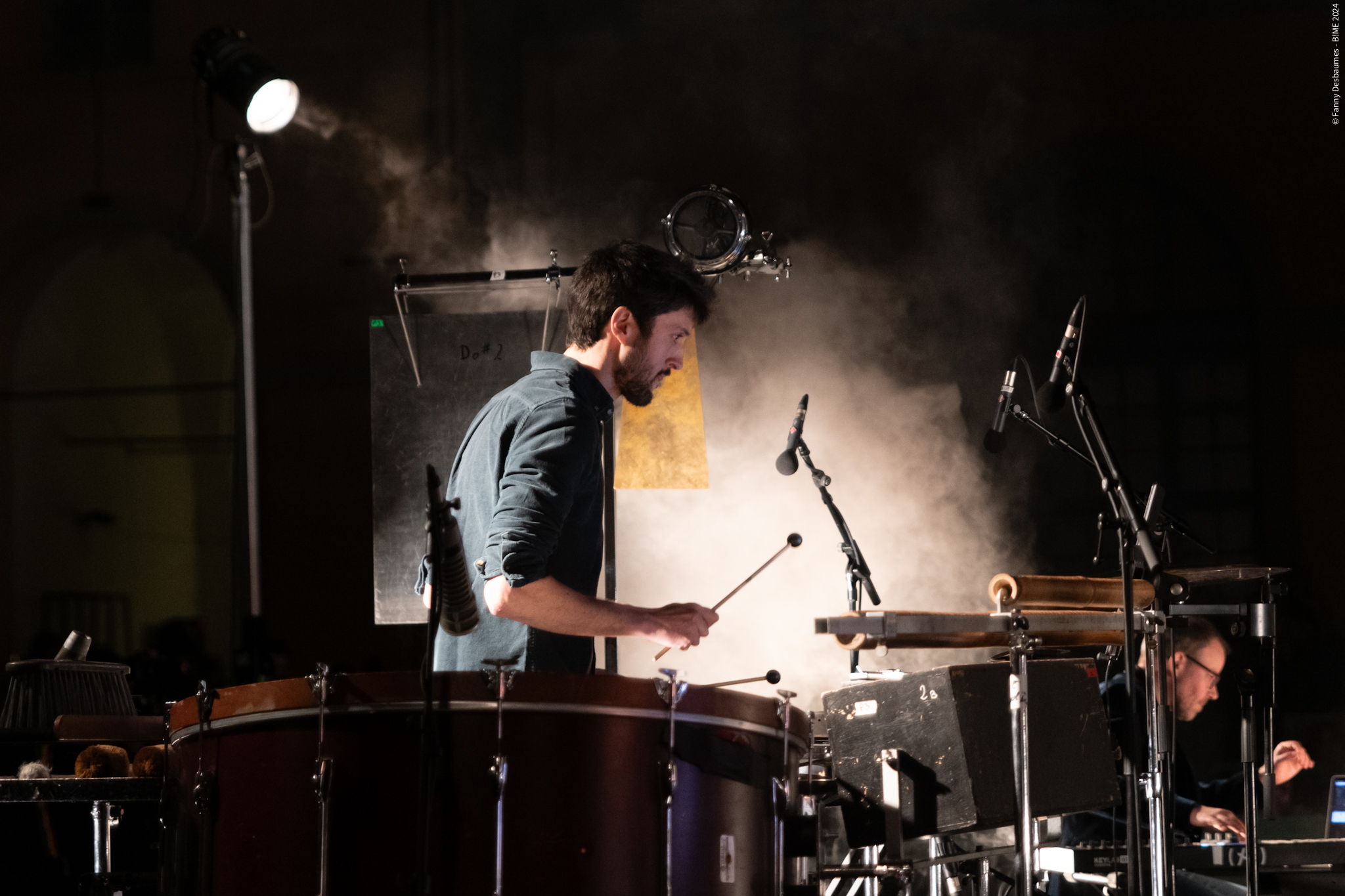
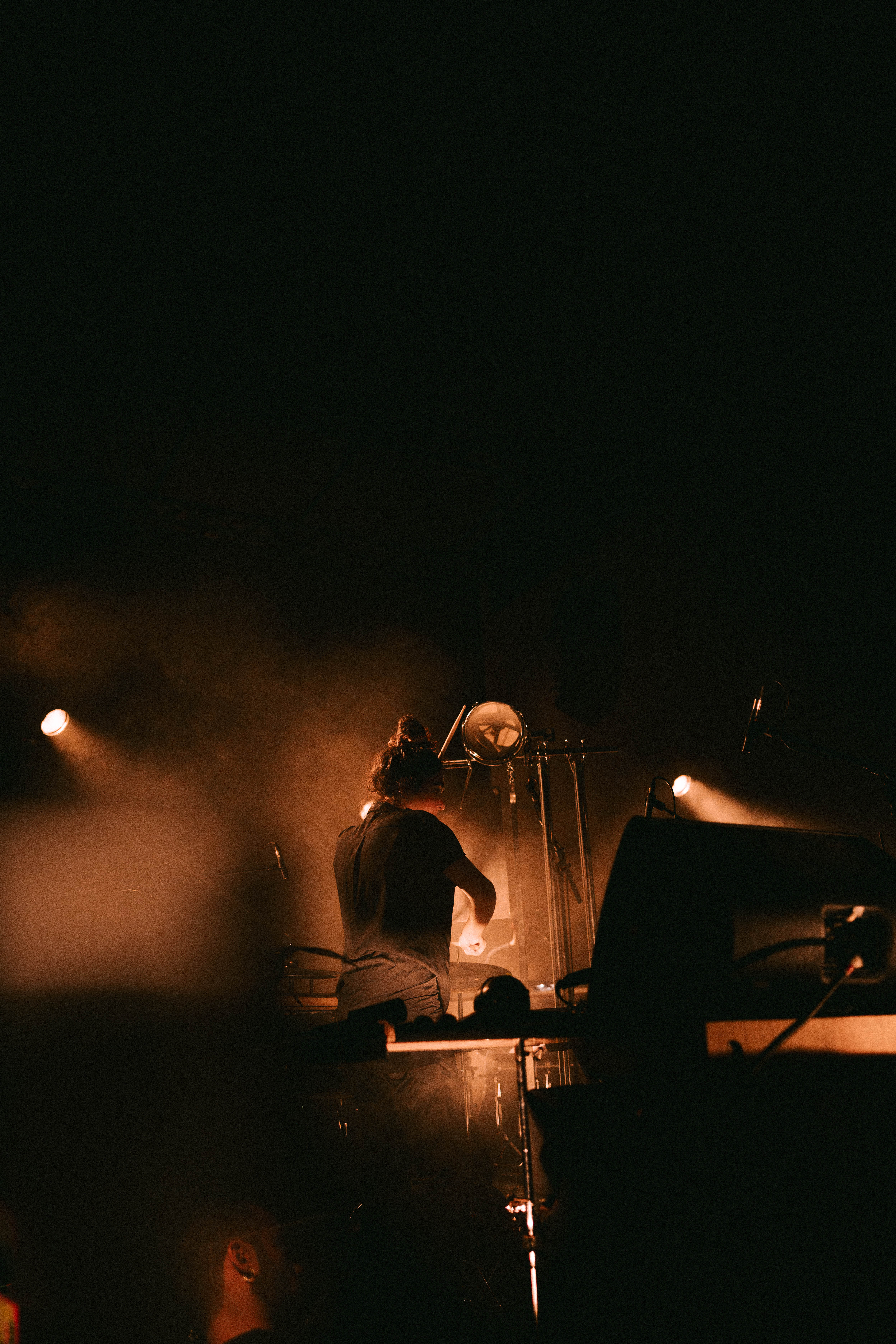
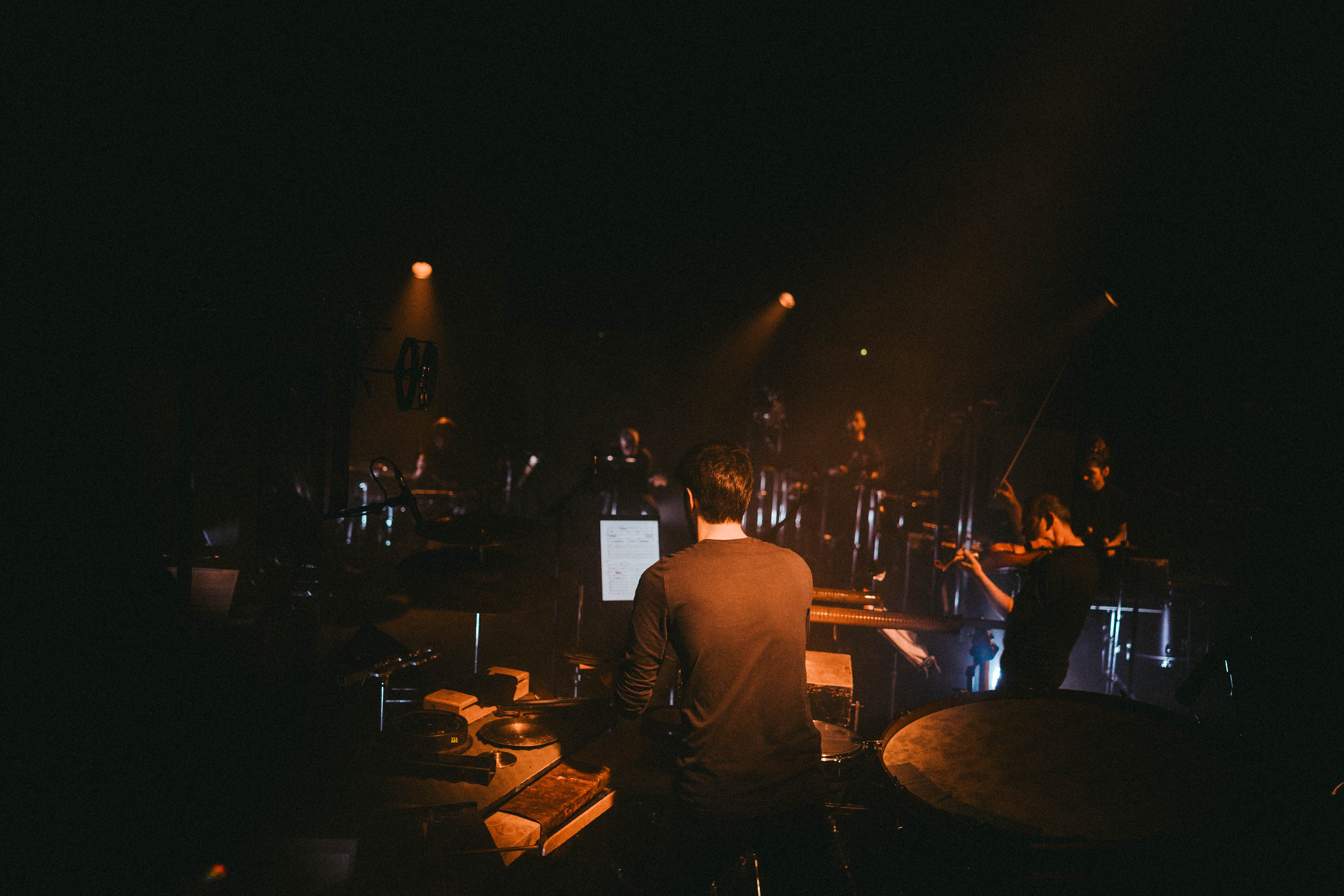
RuptuR presentsa sweeping musical style with rock influences, composed of motifs and patterns that repeat and constantly evolve, exploring their own unique textures, spaces, and rhythms.
The music seeks to create both a hypnotic effect through repetition and a gradual build-up of emotional tension that culminates in a climax.
Running at full speed for over an hour, the machine finally comes to a sudden halt, as if overcome by its own exhaustion, abruptly plunging the audience into a silent stillness filled with a deep, rumbling hum, creating an unexpected sense of disorientation: liberation, frustration… or both?
Benjamin De la Fuente and Samuel Sighicelli are jointly directing the production, following a script they wrote together.
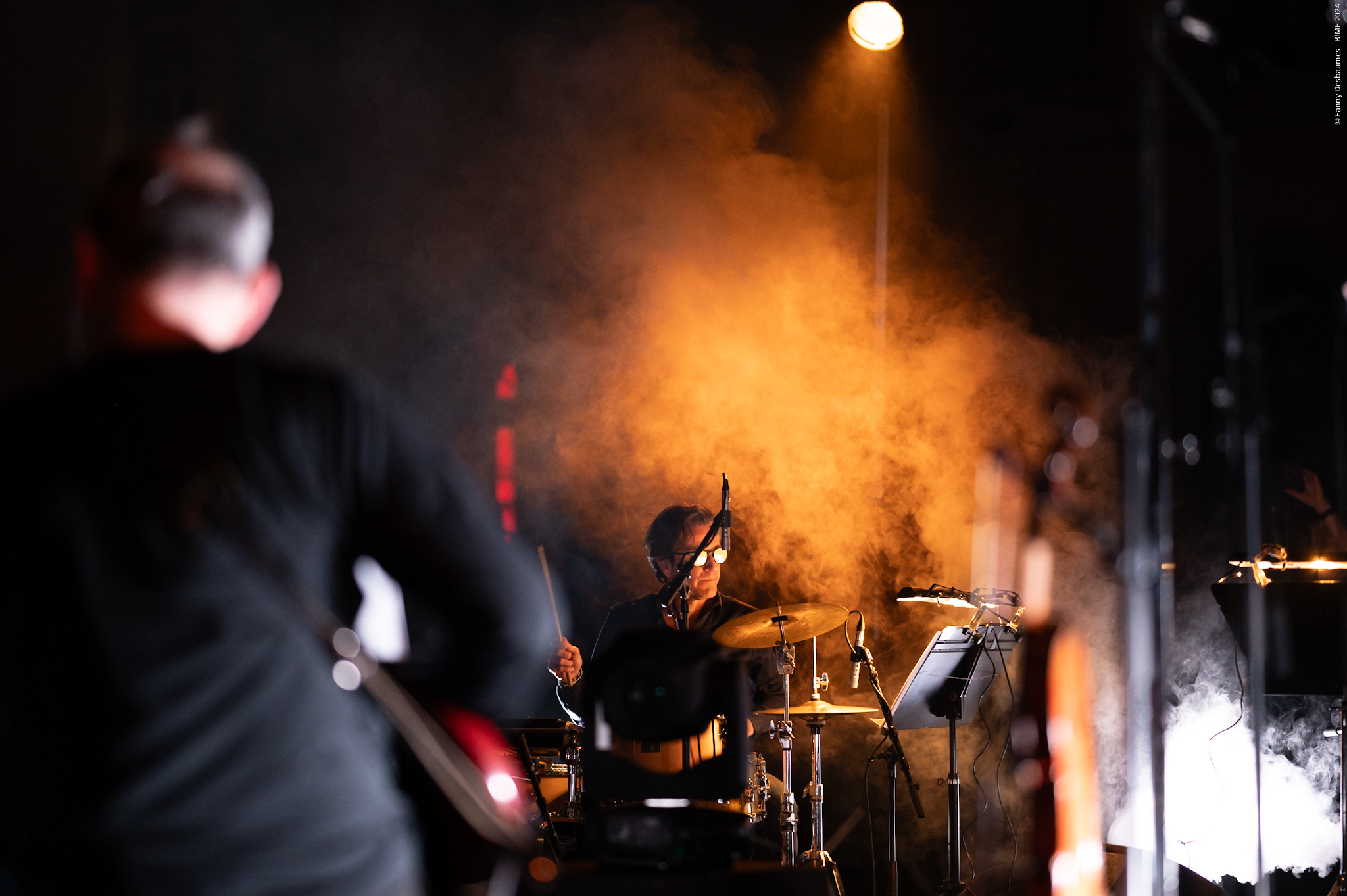
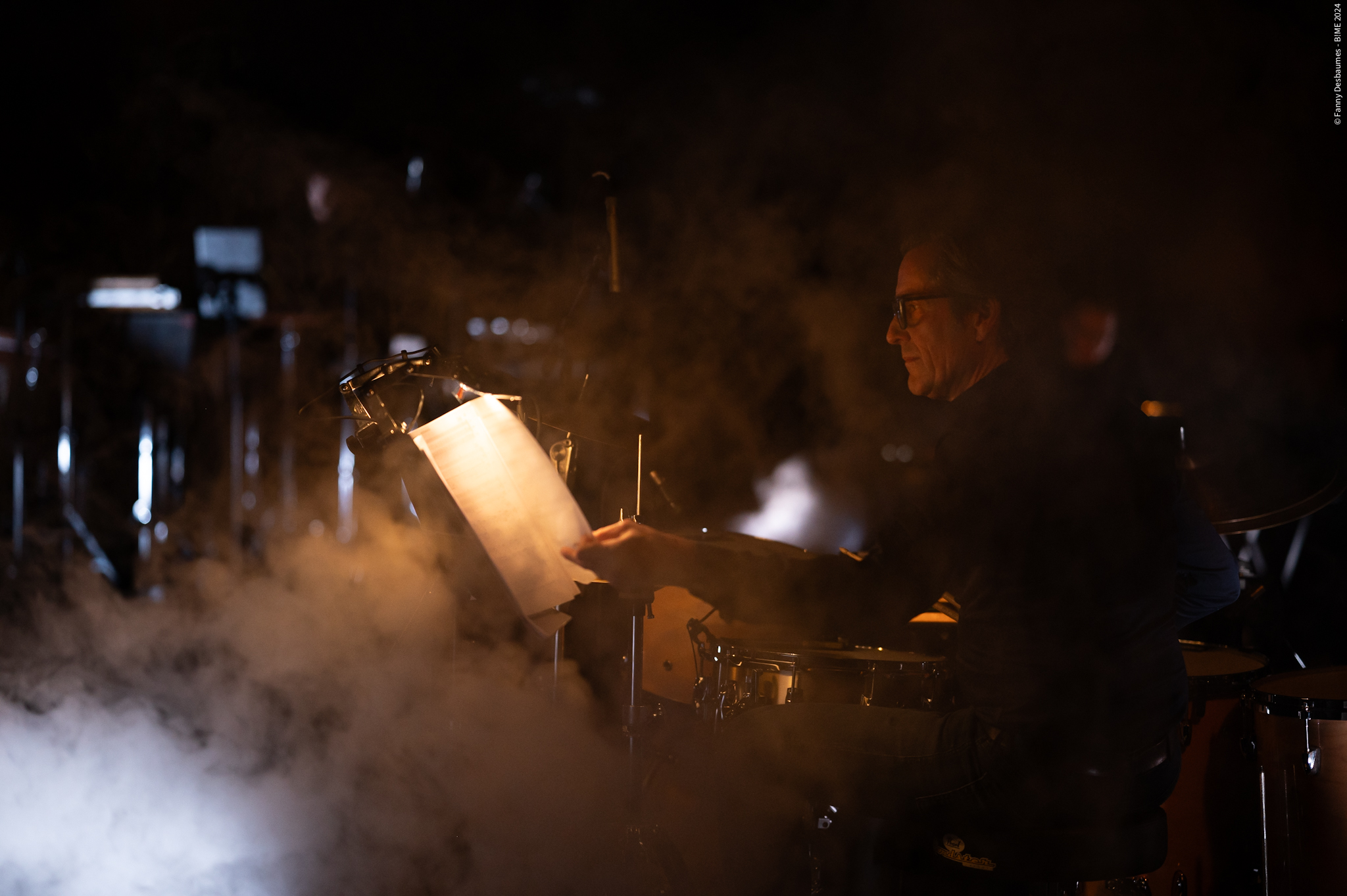
The Caravaggio and Percussions de Strasbourg ensembles come together here to form an unconventional seven-piece orchestra, amplified and enhanced by electronic sounds.

Mentions
Produced by
Sphota
Co-production
Musica; Les Percussions de Strasbourg; Grame (CNCM — Lyon) — B!ME 2024; CCAM - National Theater of Vandoeuvre-lès-Nancy
Supported by
, Sacem; SACD; DGCA; Maison de la Musique Contemporaine; Spedidam; DRAC Île-de-France; Fondation Franciset Mica Salabert
Order Assistance (Samuel Sighicelli)
Sacem
Grant for the composition of original musical works (Benjamin de la Fuente)
Ministry of Culture
In partnership with La Friche la Belle de Mai
Biography(s)
Caravaggio
Collective
Caravaggio is a hybrid musical style drawing inspiration from rock, electronic music, and contemporary jazz, refusing to be confined to a single aesthetic in order to preserve its freedom. Caravaggio’s music reflects the multiplicity and complexity of the contemporary world, going hand in hand with a fascination for cinema and its ability to invent spaces, rhythms, and collisions.
Composed of four musicians—two contemporary composers and two musicians who have left their mark on European jazz since the 1990s—the group composes collectively using an array of instruments drawn from rock, electronic music (samplers, sound processing, pads), and classical instruments (violin, double bass, piano, orchestral percussion). The music is fixed, written in its own way, yet leaves room for interpretation and improvisation.
Benjamin de la Fuente
Composer and musician
After studying composition at the Paris Conservatory (CNSM) with Gérard Grisey and improvisation with Alain Savouret, he pursued a degree in composition at IRCAM.
In 2000, he founded the Sphota company with Samuel Sighicelli, with which he creates multidisciplinary performances that tour across Europe. In 2001–02, he was a resident at the Villa Medici in Rome.
In 2004, he also co-founded the experimental rock band Caravaggio, with whom he recorded four albums and performs regularly in France and abroad.
He works as a composer, improviser, and show designer. In an effort to create a unique listening experience for each project, his compositional work is characterized by a quest for a physical and dramatic exploration of sound. He draws on both live experimentation and meticulous composition. He collaborates with other art forms to create new ways of hearing.
He writes instrumental pieces with or without electronics for various ensembles and orchestras, musical performances, and occasionally works in film. He is regularly invited to give masterclasses on improvisation and composition. He collaborates with numerous European ensembles, festivals, and institutions, including the Radio France Philharmonic Orchestra, Ictus, the EIC, Ircam, Grame, Ina-GRM, Les Percussions de Strasbourg, Olivier Benoit’s National Jazz Orchestra, the Théâtre du Châtelet, the Festival d’Aix-en-Provence, Ars Musica, and others. He is the recipient of various awards and distinctions, including the Charles Cros Grand Prix du Disque, the Grand Prix Lycéen des Compositeurs, the André Caplet Prize from the Academy of Fine Arts of the Institut de France, and the Hervé Dugardin Prize from SACEM.
Samuel Sighicelli
Improvisational pianist and composer
A graduate of the Conservatoire Supérieur de Paris, Samuel Sighicelli is an improvisational pianist and composer. He was a resident at the Villa Medici in 2003–2004.
His musical works, ranging from solo pieces to large-scale orchestral works, have been performed and/or commissioned by organizations such as INA-GRM, Radio France, the ensembles Court-circuit, Ictus, 2e2m, Cairn, Decoder, the Arditti Quartet, the Collegium Novum Zürich, the Percussions de Strasbourg, the Orchestre National de Montpellier, the Orchestre Philharmonique de Radio France...
Together with Benjamin de la Fuente, he founded the Sphota company in 2000 and the experimental rock group Caravaggio in 2004, with whom he performs regularly in France and abroad.
His artistic practice revolves around three main areas: instrumental, vocal, and electronic composition; group work (Caravaggio); and the creation of stage or immersive projects.
In these projects, he expands his role as a composer to include staging—or “creating an auditory experience”—and editing visuals in conjunction with his music.
He has served as an associate composer at several theaters: from 2012 to 2015 at the Théâtre de la Renaissance in Lyon, from 2017 to 2019 at the Espace Malraux—the national theater of Chambéry and Savoie—and then at Bonlieu—the national theater of Annecy. From 2014 to 2019, he served as an associate composer at the CRRs in Annecy and Chambéry, and from 2022 to 2023 at Le Pont Supérieur in Rennes. His opera *En dernier lieu* receivedsupport through the “Mondes Nouveaux” call for expressions of interest. In 2022, Musica Falsa published an interview with Samuel Sighicelli conducted by musicologist and journalist Guillaume Kosmicki, titled La musique en prise directe. —www.sphota.org/samuel-sighicelli
Les Percussionsde Strasbourg
Ensemble
Founded in 1962, Les Percussions de Strasbourg is a world-renowned ensemble dedicated to musical creation. With an exceptional repertoire, the group alternates between landmark pieces of the 20th century and commissions for new works, always guided by the same goals: to bring a contemporary heritage to life by constantly revisiting it and to continue innovating, at the forefront of expanding musical practices and stage expressions.
Since its founding, the ensemble has remained at the heart of musical creation, thanks to its close collaboration with today’s composers and the diversity of its offerings in terms of formats and tools: from duos to octets, from acoustic to electronic, from recitals to musical theater and dance…
With nearly 400 works dedicated to it, the group continues to maintain and expand its collection of instruments, which is unique in the world. It has numerous recordings to its credit as well as some thirty international awards, including a Victoire de la Musique Classique in 2017 for the first release on the Percussions de Strasbourg label, Burning Bright by Hugues Dufourt.
Their daily commitment to outreach is reflected in a wide range of educational initiatives, particularly among the residents of the Hautepierre neighborhood, where the ensemble is in residence. — www.percussionsdestrasbourg.com
Bruno Chevillon
Double bassist
Born on August 23, 1959, Bruno Chevillon is one of the leading figures of the double bass in the field of improvised music, at the crossroads of free jazz and contemporary composition. A sought-after accompanist as well as a daring improviser, he continues in France the emancipation of the double bass initiated by Jean-François Jenny-Clark, Joëlle Léandre, and Barre Phillips, asserting a singular and exploratory voice.
Trained at the Beaux-Arts and the Avignon Conservatory, he developed an approach attentive to sound texture, gesture, and experimentation. His meeting with Louis Sclavis in 1985 marked a decisive turning point and established him at the heart of the French scene, alongside figures such as Michel Portal, Daniel Humair, and Marc Ducret. A virtuoso of the bow and extended techniques, he also engages in interdisciplinary projects with dance, theater, and photography, and creates solo works such as his recital inspired by Pier Paolo Pasolini.
A longtime collaborator of pianist Stéphan Oliva—notably in a trio with Paul Motian—he has engaged in numerous collaborations at the intersection of jazz and contemporary music, recording some forty albums to date.
Éric Échampard
Drummer, composer
Born on December 24, 1970, in Bourg-en-Bresse (France).
Biography by Stéphane Ollivier, journalist for “Les Inrockuptibles,” commissioned by the National Jazz Orchestra 2014–2018 (conducted by Olivier Benoit).
“At once an outstanding technician, with a top-tier classical background (he holds a First Prize in classical and contemporary percussion, awarded in 1995 at the CNSM in Lyon in François Dupin’s class), and an instinctive musician, fundamentally open to all forms of contemporary popular and experimental music (from modern jazz in all its forms to rock, through the infinite spectrum of improvised music), Éric Échampard is one of those few atypical figures who, over the past fifteen years, have profoundly revitalized the art of drumming within the realm of contemporary European jazz.
Spotted simultaneously by Bernard Struber, who brought him into ORJA in 1992 (a group of which he is still a member and which has since been renamed Jazztet), and by Jacques Di Donato, who the following year offered him the drummer’s spot in his quintet and his big band Système Friche, Éric Échampard quickly established himself as the go-to drummer for the most innovative musicians on the French scene, joining one after another François Corneloup’s trio, Marc Ducret’s trio (with Bruno Chevillon), Claude Tchamitchian’s Grand Lousadzak, and Andy Emler’s MegaOctet...
Sought after by all the “legendary” musicians on the European scene (Michel Portal, Louis Sclavis, François Jeanneau), Éric Échampard deepened his long-standing relationships with Marc Ducret and Andy Emler over the years (he is also part of his trio with Tchamitchian), began new collaborations (Dave Liebman, Benjamin Moussay, Christophe Monniot, Fabrice Martinez, Yvan Robilliard, Florent Pujuila, Vincent David), and explore new horizons by venturing into free improvisation in a duo with Finnish accordionist Kimmo Pohjonen or into more hybrid projects at the intersection of rock and contemporary music with the group Caravaggio alongside Bruno Chevillon, and composers Benjamin de La Fuente and Samuel Sighicelli. ”
Since 2013, professor of jazz drums at the CMA Maurice Ravel inthe 13th arrondissement, Paris.
Location
13003
Marseille
Friche la Belle de Mai (Grand Plateau)
41 Jobin Street13003
Marseille
RuptuR
Caravaggio, Percussions de Strasbourg
Concert
Sun, May 10, 2026 | 6:00 p.m.
Friche la Belle de Mai (Grand Plateau)
Runtime
: 1 hour 15 minutes
Use of smoke machines during the performance
Prices: Full price €14
Reduced price €9

Distribution
Caravaggio
featuring
, Samuel Sighicelli
(original music, electric organ, analog synthesizer, sampler)
Benjamin de la Fuente
(original music, violin, electric guitar, found objects, electronics)
Bruno Chevillon
(double bass, electric bass, electronics)
Éric Échampard
(drums, electronic pad, found objects)
Les Percussions de Strasbourg
featuring
,Théo His-Mahier
,Lou Renaud-Bailly
, and Emil Kuyumcuyan
Christophe Schaeffer
, lighting design
Vanessa Court
's
Claude Mathia
production
Useful links